
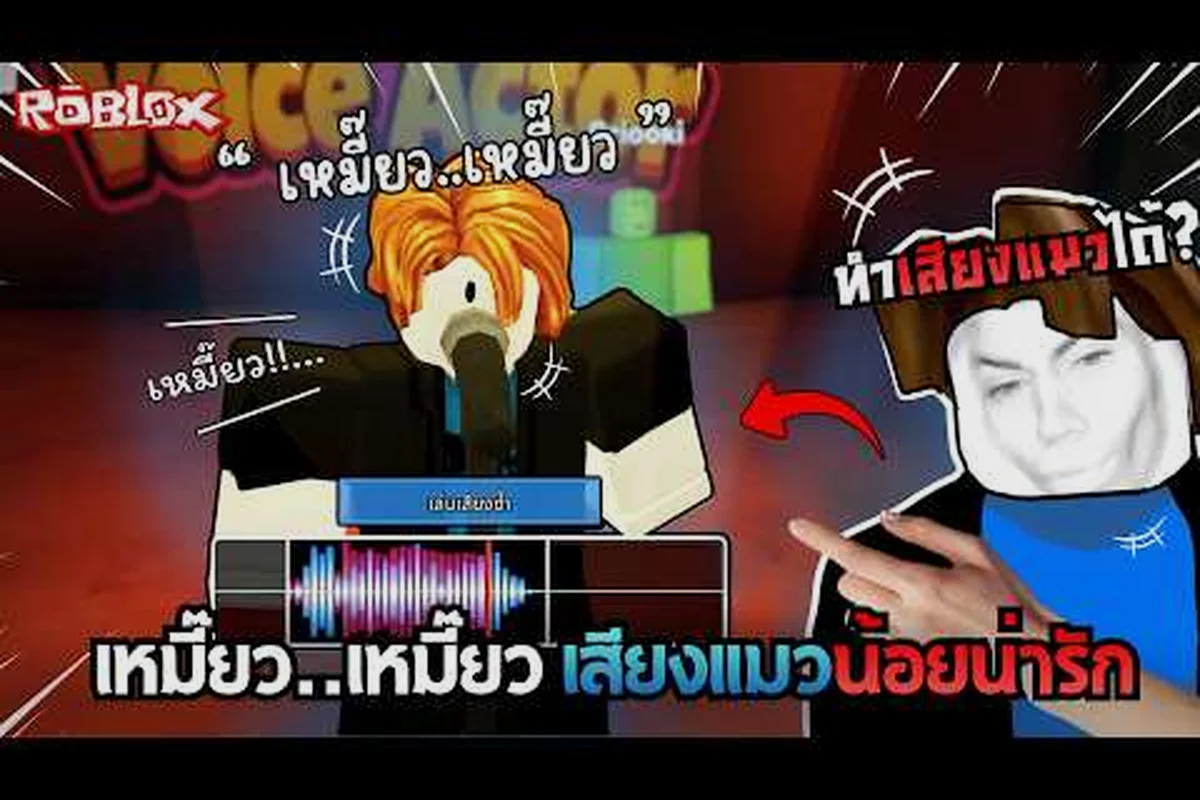
Stepping onto the red stage for the first time in Be A Voice Actor feels chaotic if you do not understand the scoring loop, yet the core flow is surprisingly simple once you see it broken down. This be a voice actor beginner guide explains exactly how a match plays out, from the moment you load into the lobby to the final scoreboard reveal, so you can skip the trial-and-error phase and start earning higher scores immediately.
Understanding the Core Match Flow
Every session in Be A Voice Actor follows the same seven-step loop, and knowing that loop before your first round removes most of the confusion new players report. The experience is built around short, repeatable rounds where players imitate a sound clip, compete for votes, and watch the scoreboard update in real time. Because the maximum server size is only seven players, matches feel intimate and fast, which means you will cycle through many rounds in a single sitting rather than waiting through long lobby queues.
The official Roblox listing confirms that Voice Chat is required to compete, so any player who has not completed platform voice verification cannot take part in a scoring round. This is the single most common blocker for new players, and it happens before you even see the stage. The game auto-saves your progress, Gems, and scores between sessions, so nothing is lost if you disconnect mid-match, but you cannot earn those scores at all without a verified voice chat account.
Here is the full match loop as it plays out in a standard session: the seven steps below move faster than most newcomers expect, often wrapping a complete round in under two minutes, so you will not have long to second-guess a performance. Understanding this rhythm matters because every phase feeds directly into the next — a weak imitation during the performance phase makes the voting phase an uphill battle, and a missed vote means you forfeit any chance to influence the scoreboard update. New players who hesitate at the microphone prop often lose rounds by a single vote, since the server size caps at seven and every tally counts toward the cumulative session score.
-
Lobby load: You spawn into a small lobby with up to six other players, and the game checks your voice chat status before letting you queue for a round.
-
Stage placement: All seven players line up on the red stage, with the microphone prop positioned in the center as the focal point.
-
Clip playback: The game plays a short sound clip — a popular sound, phrase, or effect — that every player must imitate.
-
Performance phase: Each player takes a turn at the microphone, performing their best imitation while the others listen.
-
Voting phase: Players vote for the performance they thought was best, and the game tallies those votes into a round score.
-
Scoreboard update: The scoreboard refreshes after every round, showing cumulative scores across the session.
-
Next round: The loop repeats with a new clip, and the player with the highest total score at the end wins.
The community gameplay upload from the channel behind the most-watched upload shows this exact flow in a real match, including the stage layout before the first round starts. Watching that recording before your first session gives you a visual reference for where to stand and when to perform, which reduces first-round hesitation significantly.
Voice Verification and Platform Setup
Before you can compete in any scoring round, you need to complete Roblox voice verification, and this step trips up more beginners than any other part of the game. The official page states plainly that Voice Chat is required, which means the game will not let you participate in a round if your account has not passed the platform's age and identity checks. This is not a bug — it is a hard gate built into the experience.
The verification process happens outside the game, on the Roblox platform itself. You need a verified account with voice chat enabled, and the requirements vary by region and account age. Players under 13 typically cannot access voice chat at all, while older players may need to complete an ID verification step depending on their location. If you load into Be A Voice Actor and find yourself unable to join a round, the issue is almost always voice chat setup rather than a game bug.
| Setup Step | What Happens | Common Issue |
|---|---|---|
| Account age check | Roblox verifies your account meets the minimum age for voice chat | Underage accounts are blocked entirely |
| ID verification | Some regions require a government ID or phone number | Verification can take hours to process |
| Voice chat toggle | You must enable voice chat in Roblox settings | Toggle is off by default for many accounts |
| In-game check | Be A Voice Actor detects your voice chat status on load | Game shows a warning if verification is missing |
If you run into problems at this stage, the voice chat fix guide covers the full setup process, including age verification and safety settings. Getting voice chat working before you queue for your first match saves you from sitting in the lobby while everyone else competes.
The microphone quality you use also matters more than beginners expect. Community reports consistently mention that players with clear, low-latency microphones score higher because voters can actually hear the nuances of their imitation. A built-in laptop microphone works, but a basic USB headset microphone removes background noise and makes your performance easier to judge accurately.
Your First Scoring Round Explained
The scoring system in Be A Voice Actor is round-based and cumulative, which means every single round contributes to your session total. Understanding how individual rounds are scored helps you make better performance choices, because the voting mechanic rewards clarity and accuracy over volume or speed. When the clip plays, you have a short window to memorize the sound, and then you step up to the microphone to perform.
The voting phase is where strategy enters the picture. Players vote for the performance they think best matched the original clip, and those votes convert directly into round points. Because the server holds only seven players, every vote carries significant weight — a single vote can be the difference between first and third place in a round. This small-server dynamic means you should focus on making your imitation recognizable rather than trying to impress with unrelated vocal tricks.
Here is what the scoring flow looks like from the player's perspective: the entire round moves through five distinct phases in rapid succession, and each one gives you a different opportunity to influence the outcome. First, the clip plays once and you must extract its defining characteristics — pitch contour, syllable rhythm, and emotional register — before the audio window closes. Then performance order kicks in, which matters more than beginners realize: hearing another player nail a similar imitation right before your turn can either sharpen your own delivery or rattle your confidence, depending on how well you locked in the original sound during the memorization window. After all seven players perform, the vote casting phase begins, and this is where the small-server math from earlier really bites — with only six other players voting, every single ballot carries roughly 14% of the round's total voting power, so a single split vote can completely reshuffle the leaderboard. Finally, the round score posts to the scoreboard and feeds into your cumulative session total, meaning a weak round early on stays with you for the entire match rather than resetting.
-
Clip plays once: The game plays the target sound, and you need to lock in its key characteristics — pitch, rhythm, and emotional tone.
-
Performance order: Players perform in sequence, and you can hear everyone else's attempts before or after your own turn.
-
Vote casting: After all performances finish, every player casts a vote for their favorite imitation.
-
Round score: The game converts votes into a round score and displays it on the scoreboard.
-
Cumulative total: Your round score adds to your session total, which determines the final winner.
The ace badge guide breaks down round scoring mechanics in more detail, including how accuracy and consistency factor into higher scores. For your first session, focus on matching the clip's rhythm and emotional tone, because those two elements are what voters notice most when comparing performances side by side.
One important note about the voting phase: you are competing against other players who are also trying to win, so vote splitting is a real factor. If two players deliver similar performances, votes may split between them, allowing a third player with a distinct but accurate imitation to pull ahead. This is why matching the clip precisely matters more than adding your own creative flair in early rounds.
Stage Positioning and Performance Tips
Where you stand on the stage and how you approach the microphone affects how voters perceive your performance, even though the game does not explicitly score positioning. The stage layout shown in the Enki Army recording places the microphone prop at the center, with players lined up in a row facing it. When it is your turn, stepping up to the microphone confidently and performing without hesitation signals to voters that you know what you are doing.
The performance itself should prioritize clarity over volume. Shouting into the microphone does not earn extra points, and it often makes your imitation harder to understand, which costs you votes. Instead, match the clip's volume level and articulation, because voters are listening for how closely your sound matches the original. If the clip is a quiet, whispered phrase, whispering it back accurately scores better than belting it out.
| Performance Element | Why It Matters | Beginner Mistake |
|---|---|---|
| Rhythm matching | Voters notice timing immediately | Rushing through the clip |
| Pitch accuracy | Matching the original pitch makes your imitation recognizable | Using a completely different pitch |
| Emotional tone | The clip's mood is part of its identity | Performing flat and monotone |
| Volume control | Too loud or too quiet distorts the imitation | Shouting to stand out |
| Confidence | Hesitation reads as uncertainty to voters | Pausing mid-performance |
These performance fundamentals connect directly to the improvement guide, which covers practice routines and warm-up exercises for building vocal consistency. For your first few sessions, treat every round as a learning opportunity rather than a must-win situation, because the feedback loop from voting teaches you what works faster than any external guide.
A practical tip that community players report consistently: listen to the other performances before your turn and identify what voters seem to respond to. If a player wins a round with a particular style of delivery, note what made that delivery effective and incorporate it into your own approach. This observational learning compounds quickly across multiple rounds in a single session.
How to Win More Rounds as a Beginner
Winning in Be A Voice Actor comes down to consistency across rounds rather than one spectacular performance, because the session score accumulates over every round you play. A player who places second or third in every round will often beat a player who wins one round and places last in the rest. This cumulative structure rewards steady, reliable performances over flashy one-off attempts.
The most effective beginner strategy is to focus on accuracy first and creativity second. When you hear a clip, your first job is to reproduce it as faithfully as possible, because voters are comparing your performance against the original sound, not against some abstract idea of what a good voice actor sounds like. Once you can consistently match clips accurately, you can start adding subtle creative flourishes that make your performance memorable without sacrificing recognizability.
These core strategies address the two biggest pitfalls beginners face in Be A Voice Actor: losing points to avoidable accuracy errors and failing to read the lobby's voting preferences. For example, a player who consistently lands in the top three by matching pitch and rhythm will accumulate a higher session score than someone who gambles on an over-the-top comedic take that only resonates with a fraction of the audience. The strategies below break down how to convert steady, accurate performances into round wins without relying on luck or viral moments.
-
Prioritize accuracy over originality: Match the clip's pitch, rhythm, and tone before adding any personal flair.
-
Study the winning performances: After each round, note what the winner did differently and apply that lesson to your next turn.
-
Maintain consistent energy: Avoid performing with high energy in one round and low energy in the next, because voters notice inconsistency.
-
Use the full performance window: Do not rush your imitation — take the time you have to deliver a complete, polished performance.
-
Stay engaged during other performances: Listening carefully to competitors helps you understand the voting landscape and adjust your approach.
The beginner tips guide expands on these strategies with additional techniques for getting better faster. One thing that surprises many new players is how much the social dynamics of the lobby affect voting — players who are friendly and engaged in the lobby often receive more votes than players who stay silent between rounds, even when their performances are similar.
This social element is not a flaw in the game; it is a natural consequence of human voting behavior. When voters know you and have had positive interactions with you, they are more likely to give your performance the benefit of the doubt in close calls. Building rapport in the lobby is a legitimate strategy for improving your win rate, and it costs nothing but a little friendliness.
Understanding the Game's Structure and Progression
Be A Voice Actor launched on August 30, 2026, and has already accumulated over 1.5 million visits as of September 18, 2026, with a 98.3% approval rating from more than 14,000 likes. The game is tagged as Social, Party, and Casual, which tells you that the developer designed it as a lighthearted competition rather than a hardcore ranked experience. This context matters for beginners because it means the stakes are low and the community is generally welcoming to new players.
The developer, Frameworks, manages the game through the official Roblox group, which has around 9,000 members. Joining the group grants a badge and gives you access to update announcements, which is the primary channel the developer uses to communicate changes. The game currently carries the [UPD 2] version tag, indicating that content updates are ongoing, and the most recent update was pushed on September 18, 2026.
| Progression Element | What It Does | How to Access |
|---|---|---|
| Session scores | Track your performance across rounds | Automatic — saved between sessions |
| Gems | In-game currency earned through play | Automatic — awarded for participation |
| Gamepasses | Exclusive perks available for purchase | Roblox store listing |
| Group badge | Rewards joining the developer group | Join the official group |
| Auto-save | Preserves progress between sessions | Automatic — no manual save needed |
The official Roblox game page lists the game's core features, including the "Compete To Become The Best Voice Actor" premise and the "Imitate Popular Sounds" mechanic. The game ships with special gamepasses that offer exclusive perks, though the base experience is fully playable without spending anything. For beginners, the free experience provides everything you need to learn the game and start competing.
Understanding this structure helps you set realistic expectations for your first session. You will not unlock everything immediately, and you do not need to — the core loop of listen, perform, vote, and score is available from your very first round. Focus on mastering that loop before worrying about gamepasses or advanced strategies.
Frequently Asked Questions
Do I need voice chat enabled to play Be A Voice Actor?
Yes, voice chat is required to compete in scoring rounds. The official Roblox listing confirms this requirement, and players without verified voice chat cannot participate in rounds. Complete platform voice verification before loading into the game to avoid sitting in the lobby unable to play.
How many players are in a Be A Voice Actor match?
The maximum server size is seven players, which creates an intimate competitive environment where every vote carries significant weight. In a full lobby, each performance competes against six other imitations, meaning a single vote swing can shift round standings by multiple positions. Smaller servers also mean faster round cycles — with fewer players queued to perform, you can expect roughly 10–14 scoring rounds per session compared to larger party games that often stall at 6–8. For beginners, this density is a hidden advantage: more reps per session on the same clip pool accelerates ear training for pitch and rhythm matching, and the shorter wait between your own turns keeps your vocal warm-ups from going cold.
How does the scoring system work in Be A Voice Actor?
Scoring is round-based and cumulative. After all players perform, everyone votes for their favorite imitation, and votes convert into round points. Those points add to your session total, and the player with the highest cumulative score at the end of the session wins.
Can I play Be A Voice Actor without spending Robux?
Yes, the base experience is completely free to play. The game offers special gamepasses with exclusive perks, but these are optional purchases that do not gate core gameplay. You can compete, earn Gems, and win rounds without spending any Robux.
Is Be A Voice Actor suitable for younger players?
The game requires voice chat, which means players must meet Roblox's age requirements for voice verification. The experience is tagged as Social and Casual, and the community is generally welcoming, but parents should be aware that voice chat interactions with strangers are part of the core gameplay loop.