Winning a lobby vote in Be A Voice Actor rarely comes down to volume or confidence alone. The players who consistently top the scoreboard are the ones who understand that be a voice actor sound accuracy means matching the reference clip's pitch, rhythm, and emotional texture rather than simply performing a loud caricature. This guide breaks down how the scoring system rewards precision, which sound categories punish sloppy imitation the hardest, and how to train your ear so your highest scoring sounds stop being lucky breaks and start being repeatable results. For a full breakdown of every sound the game currently recognizes—including the exact star thresholds and which ones are worth chasing first—see our Be A Voice Actor Sound List Update so you can stop guessing which impressions are even in the rotation.
How Sound Accuracy Actually Gets Scored
The scoring loop in Be A Voice Actor is deceptively simple: a clip plays, every player gets a few seconds on the microphone, and the lobby votes. What most players miss is that the vote is not a popularity contest in the traditional sense. Players are not voting for their favorite person; they are voting for the imitation that most closely matches the reference audio. That distinction is the entire foundation of be a voice actor sound accuracy, and it explains why a quiet, perfectly timed whisper can beat a screaming, off-pitch impression.
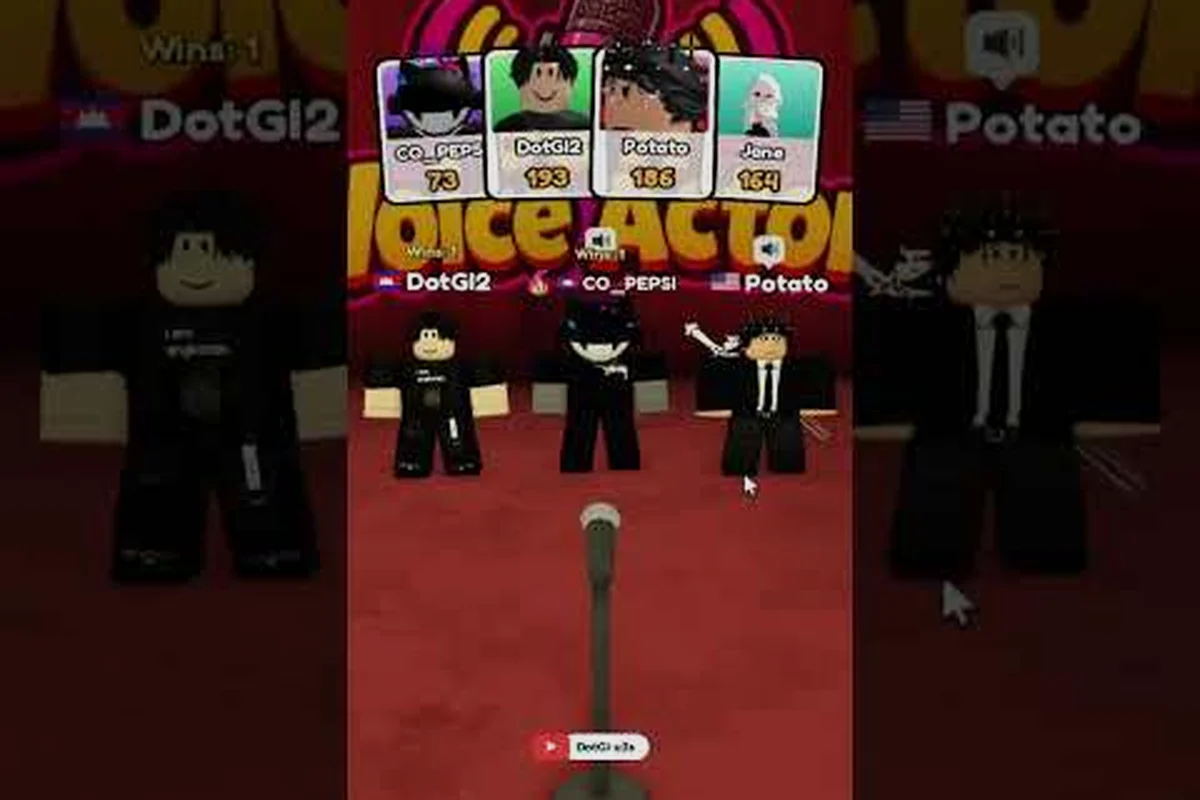
The official Roblox page for Be A Voice Actor confirms that voice chat is required to compete, which means every participant has already passed platform voice verification. This creates an interesting dynamic: everyone in the lobby can technically produce sound, but very few players train themselves to listen before they perform. Community gameplay uploads, including the round capture from UKKJOOP's gameplay upload, show that the time between clip playback and microphone activation is extremely short. Players who spend that window mentally cataloging the clip's key features consistently outperform those who spend it planning a joke.
The scoring system rewards three distinct layers of accuracy. The first is tonal matching, which covers pitch, register, and whether the sound is voiced or unvoiced. The second is rhythmic matching, which includes syllable count, pause placement, and the speed of delivery. The third is emotional matching, which is the hardest to quantify but often decides close votes. A player who nails the first two layers but delivers a flat, emotionless read will lose to someone who captures the feeling even with slightly imperfect pitch.
| Accuracy Layer | What Voters Hear | Common Failure Mode | Training Fix |
|---|---|---|---|
| Tonal Matching | Pitch, register, voiced vs. unvoiced | Speaking too high or low for the clip | Hum the clip before adding words |
| Rhythmic Matching | Syllable count, pauses, delivery speed | Rushing through long clips | Tap the beat with your finger while listening |
| Emotional Matching | Energy, attitude, emotional texture | Flat delivery despite correct words | Label the emotion out loud before performing |
The gap between a good impression and a winning impression is almost always in the third layer. Players who focus exclusively on be a voice actor sound accuracy at the tonal level often plateau because they treat every clip as a technical exercise. The clips that score highest are the ones where the performer commits to the emotional reality of the sound, whether that is the exhausted sigh of a cartoon character or the manic energy of a meme clip.
Sound Categories That Reward Different Accuracy Skills
Be A Voice Actor pulls its reference clips from several distinct sound categories, and each category tests a different aspect of your vocal control. Understanding these categories is not just about knowing what might appear in a round; it is about knowing which skill to prioritize the moment a clip starts playing. The be a voice actor sound categories break down into four broad buckets: meme sounds, celebrity impressions, anime voices, and animal or machine sound effects.
Meme sounds are the most common category and the most deceptive. They feel easy because everyone has heard them hundreds of times, but that familiarity cuts both ways. The lobby knows exactly what the original sounds like, which means small deviations are immediately obvious. A meme clip that relies on a specific vocal fry, a particular vowel stretch, or an unusual rhythm will punish players who approximate rather than replicate. The players who dominate meme rounds are the ones who have practiced the exact timing of the original, not the ones who deliver a funny-but-different version.
Celebrity impressions form a separate challenge because they require vocal signature recognition. The lobby is not just listening for whether you sound like a generic person; they are listening for whether you capture the specific vocal fingerprint of the celebrity in question. This means be a voice actor celebrity impressions demand attention to accent, speech rhythm, and the characteristic vocal tics that make a voice recognizable. A player who can capture the nasal quality of one celebrity or the gravelly texture of another will consistently outscore someone who only mimics the words.
| Category | Primary Accuracy Skill | Difficulty Driver | Example Clip Traits |
|---|---|---|---|
| Meme Sounds | Rhythmic matching | Familiarity raises the bar | Specific pauses, vowel stretches, vocal fry |
| Celebrity Impressions | Vocal signature recognition | Accent and speech rhythm | Nasal quality, gravelly texture, catchphrases |
| Anime Voices | Pitch control and emotional range | Extreme registers | High-pitched excitement, dramatic intensity |
| Animal and Machine Sounds | Unvoiced sound production | Non-speech vocalization | Growls, clicks, mechanical hums |
Anime voices are where be a voice actor anime voice accuracy separates casual players from serious competitors. Anime clips frequently demand extreme pitch ranges, rapid emotional shifts, and a level of dramatic intensity that feels unnatural in everyday speech. The players who score highest in this category are often the ones who have trained their head voice and chest voice independently, allowing them to switch registers without cracking. A sudden shift from a high-pitched excited tone to a low, serious growl is a common pattern in anime clips, and players who cannot navigate that transition smoothly will lose votes even if both halves of the performance are individually decent.
Training Your Ear Before Training Your Voice
The counterintuitive truth about be a voice actor sound accuracy is that most improvement happens before you ever speak into the microphone. Your voice can only reproduce what your ear can distinguish, which means the first training priority is active listening. Passive listening, where a clip plays in the background while you think about something else, does almost nothing for accuracy. Active listening means consciously identifying the specific features of a sound: where the pitch rises, where the rhythm accelerates, what emotional shift happens halfway through.
A practical training routine starts with the clips you already know well. Pick three meme sounds you have heard dozens of times and listen to them with fresh ears. For each one, write down three observations: the highest pitch point, the slowest rhythmic moment, and the dominant emotion. Then perform the clip and record yourself. Comparing your recording to the original will reveal gaps that you did not notice while performing, because your brain fills in missing information when you are focused on producing sound rather than analyzing it.
The same approach applies to celebrity impressions and anime voices, but with an added layer of register mapping. Before attempting a be a voice actor anime voice, identify whether the character is speaking primarily in head voice, chest voice, or a mixed register. Most anime protagonists shift between registers depending on the emotional context, and mapping those shifts before you perform will prevent the register cracks that ruin otherwise solid impressions. Players who skip this step often find themselves straining for high notes or dropping into vocal fry at the wrong moment.
-
Listen for pitch contours — trace the rise and fall of the clip with your hand before performing
-
Identify register shifts — mark where the voice moves between head, chest, and mixed registers
-
Label the emotional arc — name the starting emotion, the midpoint shift, and the ending emotion
-
Record and compare — your memory of your performance is less reliable than a recording
-
Practice the transitions — the moments between phrases matter as much as the phrases themselves
The recording step deserves special emphasis because it is the single highest-leverage habit for improving be a voice actor sound accuracy. Players consistently overestimate how closely their performance matches the reference clip, and the gap between perceived accuracy and actual accuracy is only visible when you listen back. A phone recording is sufficient; you do not need studio equipment to identify pitch errors, rhythm mistakes, and emotional flatness.
Highest Scoring Sounds and Why They Win
Certain sounds in Be A Voice Actor consistently produce higher scores than others, and the pattern is not random. The be a voice actor highest scoring sounds share three traits: they have a distinctive rhythmic signature, they contain a clear emotional peak, and they are short enough that the lobby can hold the original in memory while voting. Long clips with subtle variations are harder to score accurately, which means they produce more scattered votes and lower average scores.
Short meme clips with a single iconic moment are the most reliable high scorers. When a clip is three seconds long and contains one explosive emotional beat, every player in the lobby knows exactly what the target is. The performer who hits that beat with precision gets the vote, and the margin between first and second place is often razor-thin. This is why be a voice actor sound accuracy matters more than comedic invention: the lobby is comparing your version to the original, not evaluating your creativity.
Celebrity impressions that feature a signature catchphrase also score highly, provided the performer captures the specific vocal texture of the celebrity. A catchphrase delivered in the correct rhythm but the wrong vocal quality will lose to a less famous line delivered with perfect vocal signature recognition. The catchphrase is the hook, but the vocal texture is what convinces the lobby that you actually sound like the person in question.
| Sound Type | Average Vote Ceiling | Key Winning Trait | Common Losing Error |
|---|---|---|---|
| Short meme clip | Very high | Single explosive emotional beat | Adding extra syllables or pauses |
| Celebrity catchphrase | High | Vocal signature recognition | Correct words, wrong vocal texture |
| Anime emotional peak | High | Register shift without cracking | Straining for high notes |
| Animal sound | Moderate | Unvoiced sound production | Falling back into speech patterns |
| Machine sound | Moderate | Rhythmic consistency | Inconsistent tempo |
The moderate scorers are worth understanding because they reveal what the lobby struggles to evaluate. Animal and machine sounds require unvoiced sound production, which most players have never practiced. Growls, clicks, and mechanical hums do not follow speech patterns, and players who try to approximate them with words or syllables will sound obviously wrong. The players who score highest in these categories are the ones who commit fully to the non-speech sound, even at the risk of looking silly. The lobby rewards commitment to accuracy over comfort.
Building a Repeatable Accuracy Routine
Consistency is the difference between a player who occasionally wins a round and a player who is always in contention. The players who dominate Be A Voice Actor lobbies have a repeatable routine that they run before and during every round, and that routine is built around be a voice actor sound accuracy rather than raw vocal talent. The routine has three phases: pre-round preparation, in-round execution, and post-round analysis.
Pre-round preparation is about warming up your vocal range and your listening focus. A two-minute warm-up that includes humming scales, practicing a few register shifts, and doing a quick tongue twister will prepare your voice for the demands of the clips. Equally important is a listening reset, where you clear your mental cache of the previous round's clip so you can approach the next one fresh. Players who carry the previous clip's rhythm into the next round often start with a timing disadvantage.
In-round execution is where most players lose points. The moment the clip starts playing, your job is to lock onto the three accuracy layers: tonal, rhythmic, and emotional. Do not plan a joke, do not think about what the lobby expects, and do not second-guess your first instinct. The players who score highest are the ones who commit fully to their read of the clip the moment it ends. Hesitation reads as uncertainty, and uncertainty loses votes even when the performance itself is solid.
-
Warm up your register shifts — practice moving between head and chest voice before the round starts
-
Clear your mental cache — actively forget the previous clip before the next one plays
-
Lock the three layers — identify tonal, rhythmic, and emotional targets during playback
-
Commit without hesitation — your first read is usually your most accurate
-
Review your losses — ask what the winning performance captured that yours missed
Post-round analysis is the most underused phase of the routine. When you lose a vote, do not just queue for the next round; take ten seconds to identify what the winning performance did differently. Did they hit a pitch you missed? Did they capture an emotional shift you flattened? Did they commit to a non-speech sound while you retreated into speech patterns? Each loss contains a specific lesson about be a voice actor sound accuracy, and players who extract those lessons improve far faster than players who just grind rounds.
Advanced Accuracy Techniques for Specific Categories
Once you have the fundamentals down, each sound category rewards a specific advanced technique. These techniques are not required to start winning rounds, but they are the difference between a good player and a player who is consistently at the top of the lobby. The advanced techniques below are drawn from community observations and gameplay analysis, including the round flow visible in DotGI's capture, which shows how quickly players must transition from listening to performing.
For meme sounds, the advanced technique is micro-timing precision. Most meme clips contain a specific rhythmic quirk: a pause that is slightly too long, a syllable that is slightly rushed, or a vowel that stretches for an unusual duration. Players who replicate the quirk exactly will beat players who deliver the words correctly but with generic timing. The trick is to treat the quirk as the most important part of the clip, not an incidental detail. If the original has a half-second pause before the punchline, your version needs that half-second pause, not a quarter-second approximation.
For celebrity impressions, the advanced technique is vocal texture layering. A celebrity voice is not a single sound; it is a combination of pitch, resonance, accent, and characteristic imperfections. The players who nail be a voice actor celebrity impressions are the ones who layer all four elements simultaneously. If you only capture the accent but miss the resonance, the impression will sound like a generic regional accent rather than the specific celebrity. Practice each layer independently, then combine them until the composite sounds recognizably like the target.
| Category | Advanced Technique | What It Solves | Practice Method |
|---|---|---|---|
| Meme Sounds | Micro-timing precision | Generic timing that misses the clip's quirk | Slow the clip down and map each pause |
| Celebrity Impressions | Vocal texture layering | Accent without resonance or imperfection | Isolate pitch, resonance, accent, and flaws separately |
| Anime Voices | Register transition smoothing | Cracks and strain during emotional shifts | Practice the shift in isolation, then in context |
| Animal Sounds | Unvoiced sound commitment | Retreating into speech patterns | Practice growls and clicks without any words |
| Machine Sounds | Rhythmic consistency | Tempo drift during long clips | Use a metronome to lock the beat |
For anime voices, the advanced technique is register transition smoothing. The be a voice actor anime voice clips that score highest often contain a dramatic shift from one register to another, and the transition is where most players crack or strain. The fix is to practice the transition in isolation: sing or speak a phrase that moves from chest voice to head voice and back, focusing on the moment of shift. Once the transition is smooth in isolation, apply it to the specific clip. Players who master this technique can handle the most demanding anime clips without losing vocal control.
Frequently Asked Questions
What is be a voice actor sound accuracy?
Be a voice actor sound accuracy is how closely your performance matches the reference clip's pitch, rhythm, and emotional texture. The lobby votes for the imitation that most closely resembles the original, not the funniest or loudest performance. Players who prioritize precision over invention consistently score higher.
Which sounds score the highest in Be A Voice Actor?
Short meme clips with a single explosive emotional beat score highest because the lobby can hold the original in memory while voting. Celebrity catchphrases and anime emotional peaks also score well when the performer captures the vocal signature and navigates register shifts without cracking.
How do I improve my celebrity impressions?
Focus on vocal texture layering rather than just copying the accent. A convincing be a voice actor celebrity impression requires pitch, resonance, accent, and characteristic imperfections working together. Practice each layer independently, then combine them until the composite sounds recognizably like the target celebrity.
Why do I lose votes even when I say the right words?
Saying the right words is only one part of accuracy. If your pitch is off, your rhythm is generic, or your emotional delivery is flat, the lobby will vote for someone who captures those layers even with slightly imperfect words. Be a voice actor sound accuracy is about the full performance, not just the script.
How can I practice anime voices without straining my voice?
Warm up your register shifts before the round and practice moving between head voice and chest voice in isolation. The be a voice actor anime voice clips that cause strain are usually the ones with dramatic register transitions. Smoothing those transitions in practice will prevent cracks and protect your voice during long sessions.