
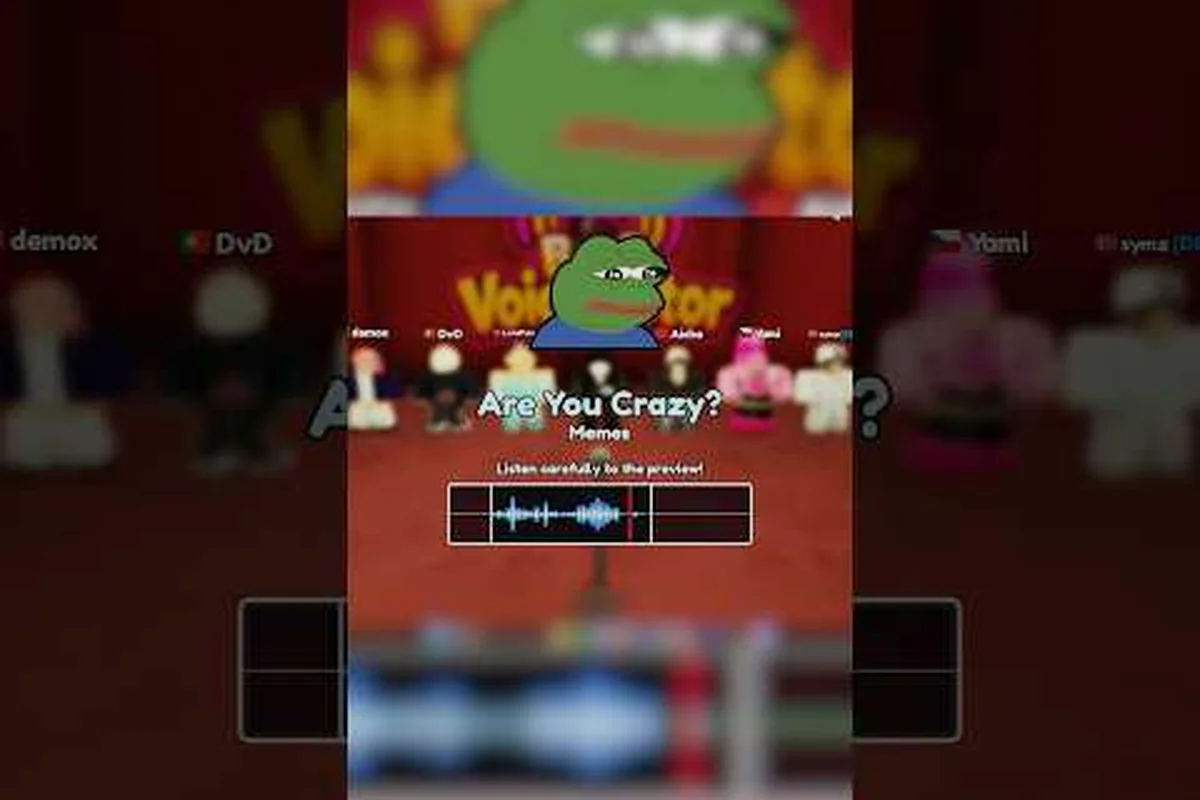
Tracking Be A Voice Actor developer updates requires a different approach than most Roblox games because the solo developer ships version markers instead of written patch notes. The listing tag, store changes, and badge timestamps are the only public signals of what changed, which matters when you are trying to figure out whether a bug was fixed or a server issue is on your end.
How Be A Voice Actor Developer Updates Actually Work
The developer behind Be A Voice Actor operates under the group "Be A Voice Actor by Frameworks" and publishes releases from a single account. There is no news page, no devlog, and no written changelog anywhere on the listing. The only public version signal is the bracketed tag on the Roblox page, which read [UPD 2] on September 18, 2026, alongside a last-updated timestamp matching that same day against a created date of August 30, 2026.
Because the developer does not publish notes, any statement about what a specific update changed has to be reconstructed from the listing tag, the store tab, and badge creation dates. All four badges were created on August 31, 2026, which suggests the core progression loop was locked in within the first two days of launch. The gap between the created date and the last-updated date shows two content pushes in under three weeks, which is a fast cadence for a solo developer.
The practical takeaway is that Be A Voice Actor developer updates are visible through indirect markers rather than explicit announcements. Players who want to know what changed need to watch the bracketed tag, the store tab for new passes, and the badge list for new achievements. This is a reconstruction exercise, not a reading exercise.
| Update Signal | What It Tells You | Where To Find It |
|---|---|---|
| Bracketed version tag | Current content version (e.g. [UPD 2]) | Roblox listing title |
| Last-updated timestamp | When the most recent push happened | Place page |
| Store tab changes | New purchasable passes or items | Store section |
| Badge creation dates | When progression milestones were added | Badges tab |
| Created date | Launch baseline for cadence math | Place page |
Be A Voice Actor Bug Fixes Without a Changelog
Since there is no written patch note system, Be A Voice Actor bug fixes are inferred from player reports and behavioral changes between version tags. The game launched with a hard 7-player server cap, which is unusually small for a social party game and likely a deliberate stability choice rather than a limitation. Small server sizes reduce the surface area for desync and voice-related bugs, but they also mean any single server issue affects a larger percentage of the active player base.
Community reports suggest that most early bugs centered on microphone capture and round scoring rather than crashes. Because the game saves Progress, Gems, and scores automatically between sessions, players do not lose progression when a server drops, which removes one of the most common frustration points in voice-based party games. The automatic save system is a quiet but significant design decision that reduces the impact of server instability.
When players report a bug, the absence of a public tracker means fixes are only visible through version tag changes. A bug that persists across [UPD 1] and [UPD 2] is either unaddressed or intentionally left alone, while a behavior change between tags signals an attempted fix. The official Be A Voice Actor listing is the only place to check the current tag and timestamp.
| Bug Category | Typical Symptom | Likely Fix Signal |
|---|---|---|
| Microphone capture | Voice not registering during rounds | Tag change + player reports |
| Round scoring | Score mismatch after a round ends | Tag change + behavior shift |
| Server drop | Sudden disconnect mid-session | Server cap adjustment or tag change |
| Store pass | Purchased pass not applying | Store tab update |
| Badge unlock | Badge not awarded after criteria met | Badge list change |
Be A Voice Actor Known Bugs and Server Issues
The most visible server issue in Be A Voice Actor is tied to its Social / Party and Casual genre placement and the short session structure. With roughly 1,700 concurrent players against 1.5 million total visits on September 18, 2026, the game runs a high-churn model where players join, complete a few rounds, and leave. Short sessions mean server issues are less likely to be reported because players simply move on rather than filing detailed bug reports.
The 7-player server cap is the most important structural fact for understanding server issues. A full server has only seven people, so when one player has a poor connection or a microphone problem, the entire round can stall. This is different from larger party games where a single bad connection is diluted across dozens of players. The small cap makes individual connection quality disproportionately important.
Known bugs reported by players tend to cluster around voice latency and round transitions. Because the game scores players on how accurately they imitate a sound clip, any delay between speaking and scoring creates a perceived unfairness. Players on slower connections report that their voice arrives after the scoring window closes, which is a latency issue rather than a game logic bug. The latency fix guide covers connection-side adjustments that reduce this problem without waiting for a developer patch.
| Server Factor | Impact on Be A Voice Actor | Player-Side Mitigation |
|---|---|---|
| 7-player cap | One bad connection stalls the round | Play with known-good connections |
| Short sessions | High churn, fewer detailed reports | Report bugs before leaving |
| Voice scoring | Latency creates perceived unfairness | Reduce local network latency |
| Auto-save | No progression loss on drop | None needed |
| Genre placement | Party-game expectations for stability | Adjust expectations |
Be A Voice Actor Lag Fix and Update Count
The Be A Voice Actor lag fix situation is complicated by the fact that the developer has not published a dedicated performance patch. The two content pushes between August 30 and September 18, 2026, are the entire public update history, and neither came with notes explaining whether lag was addressed. Players experiencing lag need to separate client-side issues from server-side problems before assuming the developer has not fixed anything.
Client-side lag in a voice game usually comes from microphone processing overhead, background applications competing for audio resources, or network jitter. The game itself is lightweight, so a modern device should handle it easily. When lag appears, it is more likely a connection issue than a rendering issue, which is why the beginner tips guide emphasizes testing your microphone setup before joining a full server.
The Be A Voice Actor game update count stands at two public pushes as of September 18, 2026, based on the created date and last-updated timestamp. This is a fast cadence for a solo developer, but the lack of patch notes means players cannot tell whether updates are content additions, bug fixes, or stability improvements. The [UPD 2] tag is the only version marker, and it does not distinguish between update types.
| Update Metric | Value (as of 2026-09-18) | Interpretation |
|---|---|---|
| Created date | 2026-08-30 | Launch baseline |
| Last updated | 2026-09-18 | Second content push |
| Version tag | [UPD 2] | Current public version |
| Badge creation | 2026-08-31 (all four) | Progression locked early |
| Patch notes | None published | Reconstruction required |
Reading the Store Tab for Update Clues
The store tab is one of the few places where Be A Voice Actor developer updates leave a visible trace. The first purchasable pass appeared on September 18, 2026, the same day the listing tag moved to [UPD 2] and the last-updated timestamp refreshed. This alignment suggests the second update was at least partially monetization-focused, adding a store pass alongside whatever else changed under the hood.
Because the developer does not announce store additions, players who check the store tab regularly can spot new passes before they are widely discussed. The store tab also reveals pricing strategy, which is useful for players deciding whether to spend Robux. The player count analysis shows how the game's live player numbers move independently of total visits, which helps contextualize whether a store addition drove a concurrent player spike.
The relationship between store changes and version tags is the closest thing to a changelog this game offers. When the tag changes and the store tab gains a new item on the same day, that is a strong signal the update included monetization. When the tag changes without a store addition, the update was likely bug fixes or backend adjustments. Neither is confirmed, but the pattern is consistent with the September 18 snapshot.
| Store Signal | What It Suggests | Confidence Level |
|---|---|---|
| New pass + tag change same day | Monetization update | High |
| Tag change, no store change | Bug fix or backend work | Medium |
| Store change, no tag change | Hotfix or silent addition | Low |
| Badge added | Progression expansion | High |
| Timestamp refresh only | Minor backend push | Low |
Comparing Be A Voice Actor to Its Closest Competitor
The nearest competitor in the imitate-the-sound sub-genre is Make That Sound!, which launched on August 31, 2026, with about 3.4 million visits and roughly 22,000 favourites. It uses the same core loop — listen to a clip, copy it into your microphone, get scored — but has been live longer and therefore has a larger accumulated visit count. Be A Voice Actor counters with a hard 7-player server cap, a shorter round rotation, and a faster update cadence.
The update cadence difference is meaningful because Make That Sound! has a longer history and more accumulated content, while Be A Voice Actor is still in its first month. A faster cadence from a solo developer is impressive, but it also means more opportunities for bugs to slip through without notes. The upcoming updates article tracks what might come next based on the current trajectory.
The comparison matters for players deciding which game to invest time in. Be A Voice Actor's smaller server cap creates a more intimate round experience but also makes individual connection quality more important. Make That Sound!'s larger accumulated player base suggests more social proof, but Be A Voice Actor's 98.3% approval rating (14,698 likes against 260 dislikes) shows strong satisfaction among players who stick around.
| Comparison Point | Be A Voice Actor | Make That Sound! |
|---|---|---|
| Launch date | 2026-08-30 | 2026-08-31 |
| Total visits | 1.5 million | 3.4 million |
| Server cap | 7 players | Not specified |
| Update cadence | 2 pushes in 3 weeks | Longer history |
| Approval rating | 98.3% | Not specified |
Frequently Asked Questions
How do I check the current Be A Voice Actor version?
The current version is shown as a bracketed tag in the Roblox listing title, which read [UPD 2] on September 18, 2026. Check the official game page for the live tag and last-updated timestamp.
Why are there no patch notes for Be A Voice Actor?
The solo developer behind the "Be A Voice Actor by Frameworks" group ships updates without a news page, devlog, or written changelog. The only public version signals are the listing tag, store tab changes, and badge creation dates, so players must reconstruct what changed from those markers.
Does Be A Voice Actor save my progress automatically?
Yes, Progress, Gems, and scores are saved automatically between sessions, so nothing is lost when a server drops or you disconnect mid-round. This design choice reduces the impact of server instability, which is common in short-session party games.
What causes lag in Be A Voice Actor?
Lag is usually a connection issue rather than a rendering problem because the game is lightweight. Microphone processing overhead, background applications competing for audio resources, and network jitter are the most common causes, especially on slower connections where voice arrives after the scoring window closes.
How many updates has Be A Voice Actor received?
As of September 18, 2026, the game has received two public content pushes based on the created date of August 30 and the last-updated timestamp of September 18. The [UPD 2] tag marks the current version, but without patch notes, the content of each push remains unconfirmed.